
线程执行框架
线程执行框架
提示
如何获取一个线程所执行的代码的运行结果?
本节,我们来讲线程执行框架。线程执行框架提供了一系列类,封装了线程创建、关闭、执行、管理等跟业务逻辑无关的代码逻辑,这样做一方面实现了业务逻辑与非业务逻辑的解耦,另一方面方便代码复用,开发者不再需要编写创建线程、启动线程等代码。实际上,上一节中讲到的ThreadPoolExecutor、Executors就隶属于线程执行框架。在开始本节的正式内容之前,我还是给你出一道思考题:如何获取一个线程所执行的代码的运行结果?
一、Executor、ExecutorService、Executors
线程执行框架包含三个长相类似的类:Executor、ExecutorService、Executors,很多人分不清楚它们的区别。实际上,Executor和ExecutorService都是接口。Executor接口只提供了一个函数:execute()。ExecutorService接口对Executor接口进行了扩展,额外提供了很多其他函数,包括submit()、shutdown()、shutdownNow()、awaitTermination()等等。JUC提供的现成的执行器并不多,前面讲到的ThreadPoolExecutor便是其中最常用的 一个。当然,我们也可以基于Executor接口或ExecutorService接口自定义执行器。Executors类是一个工具类,用来创建各种执行器,有点类似容器中的的Collections工具类。
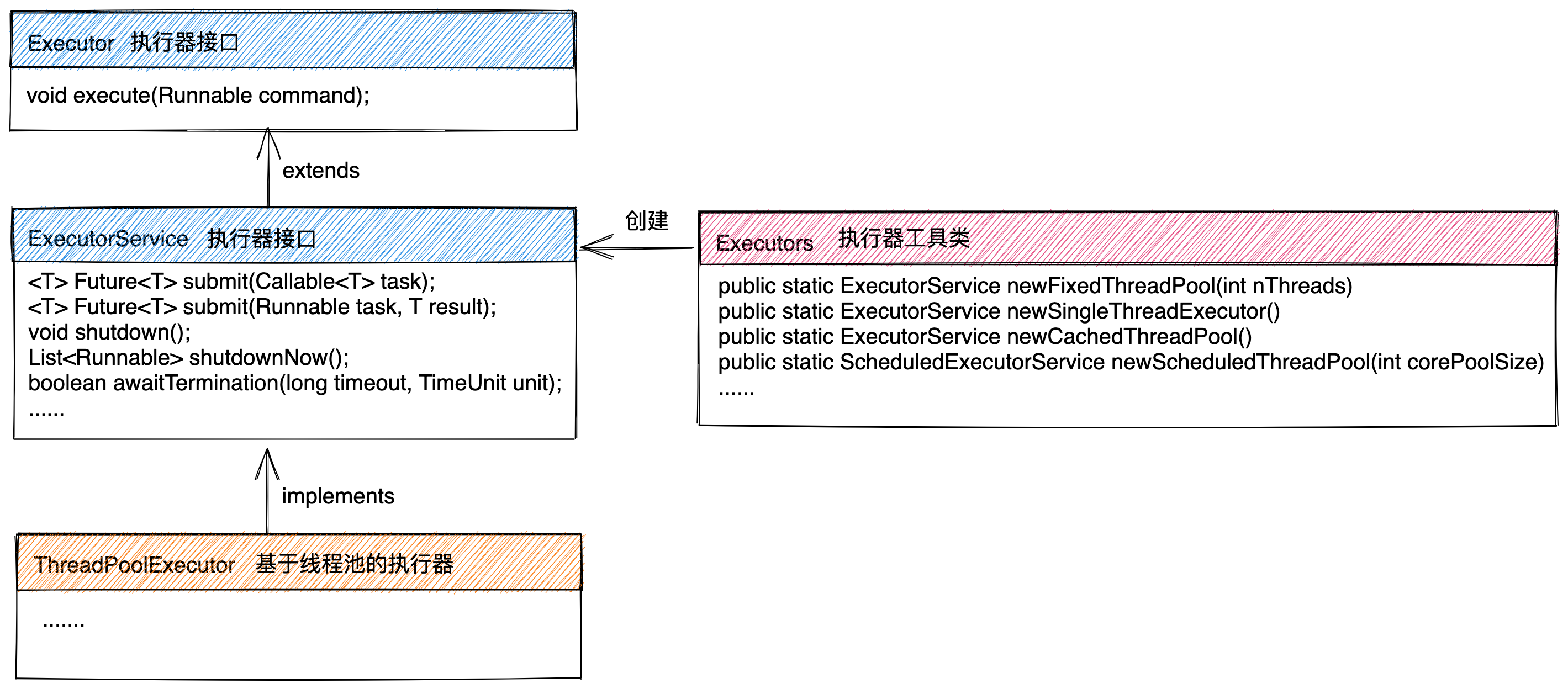
ThreadPoolExecutor在上一节中已经讲过,Executor、ExecutorService只是接口,比较简单,因此,我们重点看下Executors,特别是其中的几个工厂方法。
1)newFixedThreadPool()
newFixedThreadPool()函数用来创建大小固定的线程池,其代码实现如下所示,T hreadPoolExecutor中的maximumPoolSize跟corePoolSize相等,因此,线程池中的线程都是核心线程,一旦创建便不会销毁。workQueue为LinkedBlockingQueue,默认大小为Integer.MAX_VALUE,大小非常大,相当于无界阻塞队列。任务可以无限的往workQueue中提交,永远都不会触发拒绝策略。
public static ExecutorService newFixedThreadPool(int nThreads) {
    return new ThreadPoolExecutor(nThreads, nThreads,
                                  0L, TimeUnit.MILLISECONDS,
                                  new LinkedBlockingQueue<Runnable>());
}
2)newSingleThreadExecutor()
newSingleThreadExecutor()函数用来创建单线程执行器,其代码实现如下所示。这个函数返回的是大小固定为1的ThreadPoolExecutor对象。workQueue同样是大小为Integer.MAX_VALUE的LinkedBlockingQueue。
public static ExecutorService newSingleThreadExecutor() {
    return new ThreadPoolExecutor(1, 1, 0L, TimeUnit.MILLISECONDS,
                                  new LinkedBlockingQueue<Runnable>()));
}
3)newCachedThreadPool()
newCachedThreadPool()函数创建的线程池只包含非核心线程,线程空闲60秒以上便会销毁。因为workQueue是SynchronousQueue类型的,而SynchronousQueue是长度为0的阻塞队列,所以,workQueue不存储任何等待执行的任务。如果线程池内存在空闲线程,那么新提交的任务会被空闲线程执行,如果线程池内没有空闲线程,那么线程池会创建新的线程来执行新提交的任务。除此之外,线程池大小为Integer.MAX_VALUE,因此,线程池中创建的线程个数可以非常多。
public static ExecutorService newCachedThreadPool() {
    return new ThreadPoolExecutor(0, Integer.MAX_VALUE, 60L, TimeUnit.SECONDS,
                                  new SynchronousQueue<Runnable>());
}
4)newScheduledThreadPool()
newScheduledThreadPool()函数用来创建一个支持定时或周期性的执行任务的线程池,其部分代码实现如下所示。线程池的核心线程池大小为corePoolSize,整个线程池的大小为Integer.MAX_VALUE。
public static ScheduledExecutorService newScheduledThreadPool(int corePoolSize) {
    return new ScheduledThreadPoolExecutor(corePoolSize);
}

public class ScheduledThreadPoolExecutor extends ThreadPoolExecutor
                                         implements ScheduledExecutorService {
    public ScheduledThreadPoolExecutor(int corePoolSize) {
        super(corePoolSize, Integer.MAX_VALUE, 0, NANOSECONDS,
              new DelayedWorkQueue());
    }

    //定时执行任务(只执行一次)
    public ScheduledFuture<?> schedule(Runnable command,
                                       long delay,
                                       TimeUnit unit) { ... }
    //周期性执行任务(固定频率)
    //period指的是上一个任务执行开始与下一个任务执行开始之间的时间间隔
    public ScheduledFuture<?> scheduleAtFixedRate(Runnable command,
                                                  long initialDelay,
                                                  long period,
                                                  TimeUnit unit) { ... }
    //周期性执行任务(固定间隔)
    //delay指的是上一个任务执行结束与下一个任务开始之间的时间间隔
    public ScheduledFuture<?> scheduleWithFixedDelay(Runnable command,
                                                     long initialDelay,
                                                     long delay,
                                                     TimeUnit unit) { ... }
    //...省略其他方法...
}
二、Runnable、Callable、Future
前面讲到,当我们使用线程执行任务,我们需要将任务封装成Runnable对象,并将任务对应的业务逻辑放入Runnable的run()方法。因为run()方法没有返回值,所以,如果我们需要在另一个线程中获取这个线程的执行结果,那么,我们需要让两个线程共享同一个结果变量。示例代码如下所示。线程sumThread将计算结果通过共享变量sumRes传递给了线程main。
public class Demo54_1 {
  private static final List<Integer> data = Arrays.asList(3, 4, 6, 2, 1);
  private static int sumRes = 0;
  public static void main(String[] args) throws InterruptedException {
    Thread sumThread = new Thread(new Runnable() {
      @Override
      public void run() {
        for (Integer d : data) sumRes += d;
      }
    });
    sumThread.start();
    sumThread.join();
    System.out.println(sumRes);
  }
}
除了共享变量之外,线程执行框架提供了另外一种返回线程执行结果的方法。示例代码如下所示,Callable替代Runnable来表示待执行的任务,带返回值的call()函数替代不带返回值的run()函数封装业务逻辑,submit()函数替代execute()函数提交任务。Future上的get()函数是阻塞函数,只有当call()函数执行结束返回之后,get()函数才从阻塞中唤醒。
public class Demo54_2 {
  private static final List<Integer> data = Arrays.asList(3, 4, 6, 2, 1);
  public static void main(String[] args) throws ExecutionException, InterruptedException {
    ExecutorService executor = Executors.newSingleThreadExecutor();
    Future<Integer> future = executor.submit(new Callable<Integer>() {
      @Override
      public Integer call() throws Exception {
        int sumRes = 0;
        for (Integer d : data) sumRes += d;
        return sumRes;
      }
    });
    Integer sumRes = future.get();
    System.out.println(sumRes);
  }
}
三、课后思考题
基于Executor接口,实现一个支持串行执行任务的SerialExecutor执行器。